

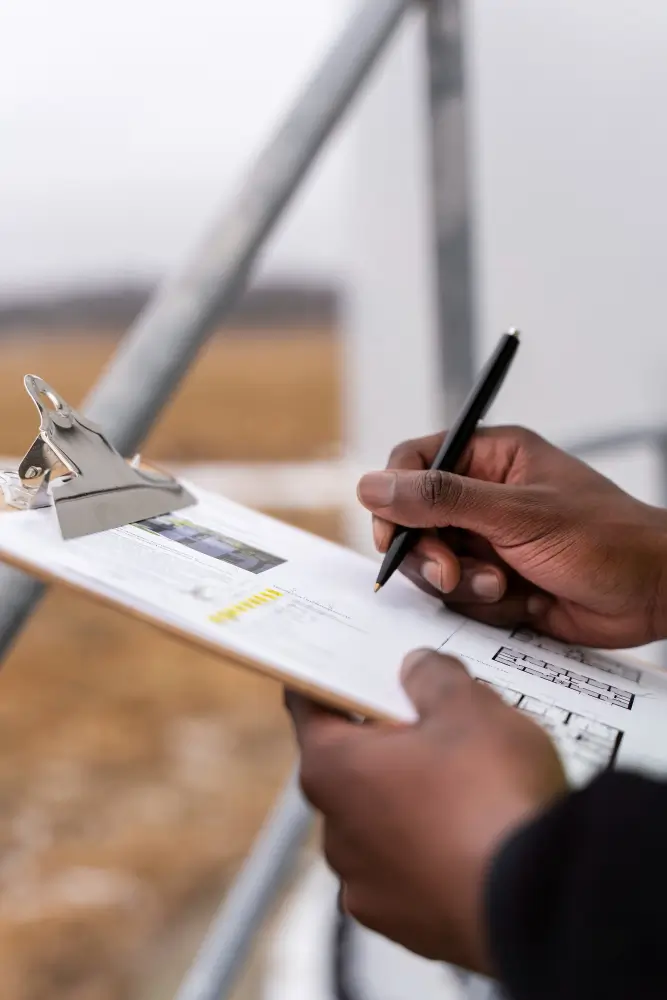
Know what your building is really made of, before it is too late.
Nigeria has tens of thousands of aging buildings that were constructed before current engineering codes, built with substandard materials, or extended without professional engineering supervision. Many of these structures are still occupied, still being loaded, and still at risk. Building collapses across Nigeria, disproportionately concentrated in Lagos, Abuja, and other dense urban centres, are a painful reminder that structural integrity cannot be assumed.
Masterstone Engineering Ltd. provides professional structural assessment and auditing services for existing buildings of all types and ages. Our structural assessments give building owners, facility managers, landlords, and government agencies an accurate picture of their building’s current structural condition, along with a clear and actionable remediation plan where required.
What is a Structural Assessment?
A structural assessment (also called a structural survey or structural audit) is a systematic engineering evaluation of an existing building’s load-bearing elements. It is carried out by a qualified structural engineer who physically inspects the structure, reviews available drawings, assesses material condition, and evaluates the building’s ability to safely carry its current and intended loads.
A structural assessment is not the same as a general building survey or a valuation report. It specifically focuses on structural safety (foundations, columns, beams, slabs, walls, and connections) and delivers an engineering judgement on the structure’s integrity.
When Do You Need a Structural Assessment?
- Before purchasing a property, especially an older building or one with visible cracks or distress
- Before adding additional floors or significant loads to an existing building
- When cracks, deflections, or unusual movements are observed in the structure
- When a building has suffered damage from flooding, fire, impact, or vibration
- For regulatory compliance or insurance purposes
- As part of a due diligence process for building acquisition or redevelopment
- For buildings over 15 years old that have not been professionally assessed
- Before undertaking major renovation, extension, or change of use
Our Structural Assessment Process
- Document Review, We begin by reviewing any available structural drawings, as-built records, and previous inspection reports. Where drawings are unavailable, we conduct measured surveys.
- Visual Inspection, Our structural engineers conduct a systematic visual inspection of all accessible structural elements, recording crack patterns, deflections, spalling, corrosion, settlement, and other defects.
- Material Testing (where required), For buildings where material quality is uncertain, we recommend and supervise non-destructive testing (NDT) including rebound hammer tests, cover meter surveys, and carbonation tests on concrete.
- Structural Calculations, Where specific concerns are identified, we carry out targeted structural calculations to verify whether individual elements are adequate under current or proposed loading.
- Structural Audit Report, We produce a comprehensive written report covering all findings, photographic evidence, risk classifications (Low / Medium / High / Critical), and specific remediation recommendations.
- Remediation Design (Optional), Where issues are identified, we can proceed directly to designing the required structural repairs, retrofitting, or strengthening works.
What Our Structural Audit Report Covers
- Executive summary and overall structural condition rating
- Detailed findings for each structural element (foundations, columns, beams, slabs, walls, roof)
- Photographic record of all defects observed
- Risk classification matrix
- Prioritised remediation recommendations
- Engineer’s professional opinion on fitness for purpose
- Estimated remediation cost ranges (where requested)
Who Commissions Structural Assessments?
- Property developers and investors conducting pre-acquisition due diligence
- Building owners concerned about the condition of their property
- Facility managers responsible for the safety of occupied buildings
- Lagos State Building Control Authority (LASBCA) compliance requirements
- Insurance companies requiring evidence of structural condition
- Lawyers and estate agents requiring a professional engineer’s report for property transactions